


PoE Modules: Principles, Classifications, Advantages and Applications
Release time:
2026-09-17 10:33
Source:


In scenarios such as security surveillance, weak current engineering, smart campuses and industrial networking, cumbersome cabling, difficult power access and high construction costs are common pain points. As a core component of Power over Ethernet systems, PoE modules are adopted by a growing number of system integrators to simplify cabling architectures. Drawing on its expertise in power management and PoE power supply, Winchen Power integrates stable power delivery, intelligent identification, overcurrent protection and other features into its PoE module solutions. This helps reduce project construction complexity and improve the operational stability of end devices.

Many engineers and junior operation & maintenance staff often confuse PoE modules, PoE switches and PoE injectors. They also tend to overlook the importance of power supply standards, power matching and safety protection. This professional guide combines practical application insights of Winchen Power PoE modules to fully unpack core knowledge of PoE modules, enabling you to understand, select and deploy them reliably in projects.
🔎 I. What is a PoE Module? Core Definition

PoE stands for Power over Ethernet. A PoE module is a core functional component built on the IEEE 802.3 series standards, which enables Ethernet cables to transmit both data and DC power simultaneously. Its value goes far beyond simply powering devices. More importantly, it implements power management, device identification and safety protection within a unified link.
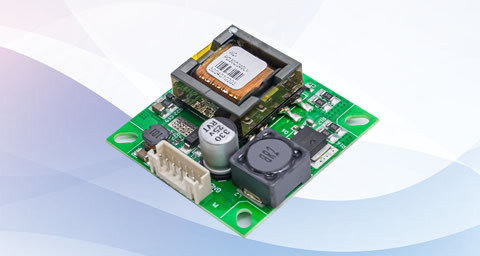
Winchen Power PoE modules are designed for scenarios requiring Ethernet power supply to IP cameras, wireless APs, access control terminals, industrial sensors and other devices. With built-in power management and protection circuits, the modules cut down the number of extra power adapters in complex cabling environments, reduce reliance on on-site power sources and deliver more streamlined networking solutions.
A complete PoE power supply system consists of two core parts:
- PSE (Power Sourcing Equipment): PoE injector modules, PoE power adapters and PoE switch ports, responsible for power output and management.
- PD (Powered Device): PoE modules embedded in end devices and PoE splitter modules, responsible for receiving power and facilitating data communication.
⚙️ II. Working Principle of PoE Modules (Professional & Plain-language Version)

The stable co-transmission of power and data over Ethernet cables relies on PoE modules adopting power-data separation or superimposed transmission mechanisms. Isolation, filtering and intelligent detection circuits are deployed to mitigate interference risks.
A standard Ethernet cable contains 8 copper conductors, supporting two common operating modes:
- Spare Pair Power Mode DC power is transmitted over the spare pairs of the Ethernet cable, while the remaining pairs carry network data. This intuitive architecture fits certain traditional cabling scenarios.
- Data Pair Power Mode Low-voltage DC power is superimposed onto data-carrying pairs via high-frequency isolation technology. Internal filtering and isolation circuits of the module suppress the impact of power on data signals to guarantee stable network transmission.
Winchen Power PoE modules are engineered with three enhanced capabilities:
- Intelligent PD identification: Prevent accidental power supply to non-PoE devices.
- Isolation and filtering design: Reduce mutual interference between power lines and data lines.
- Integrated protection mechanisms: Respond to abnormal conditions including overcurrent, short circuit and overvoltage to boost device safety.
📊 III. Mainstream PoE Standards & Power Classification
| Standard | Port Output Power | Reference Available Power at End Device | Typical Devices |
|---|---|---|---|
| IEEE 802.3af | Max 15.4W | ≤12.95W | IP cameras, wireless APs, access control units, small sensors |
| IEEE 802.3at | Max 30W | ≤25.5W | High-definition PTZ cameras, high-power WiFi6 APs, IP phones |
| IEEE 802.3bt | Max 60W | ≤51W | Multi-lens cameras, PTZ high-speed domes, industrial terminals, small displays |
The core of PoE module selection lies in matching standards and power ratings. Different standards determine the power capacity of each port and directly affect the stability of cameras, APs, access control units and industrial terminals.
- IEEE 802.3af (Standard PoE) Port output power: approx. 15.4W Reference available power at end device: approx. 12.95W Typical devices: regular IP cameras, IP phones, basic wireless APs Winchen Application Tip: Suitable for networking with low-power end devices at small points, such as basic surveillance in small shops and offices.
- IEEE 802.3at (PoE+) Port output power: approx. 30W Reference available power at end device: approx. 25.5W Typical devices: HD dome cameras, dual-band wireless APs, facial recognition access control Winchen Application Tip: Ideal for medium-power end devices; widely adopted in security and enterprise wireless networks.
- IEEE 802.3bt (PoE++) Port output power: 60W / 90W Reference available power at end device: higher capacity Typical devices: 4K surveillance cameras, industrial APs, machine vision equipment, edge computing terminals Winchen Application Tip: Designed for high-power IP devices and industrial applications with stringent requirements for power stability, heat dissipation and protection design.
✅ IV. Core Advantages of PoE Modules: Why Are Projects Increasingly Adopting Them?

- Reduced Cabling and Lower Construction Costs In traditional solutions, network devices require Ethernet cables for data transmission plus nearby power outlets, adapters and extra power cords. PoE module solutions reduce the quantity of power cords and adapters, delivering prominent advantages especially for scattered device points with limited power access.
Winchen Power PoE modules embed power supply capability into Ethernet links, helping system integrators cut coordination work for on-site power sources and shorten construction cycles.
- Flexible Deployment, Free from Outlet Limitations If IP cameras, wireless APs and access control terminals depend on nearby power outlets, their installation positions will be restricted. PoE modules allow devices to draw power through Ethernet cables within a reasonable distance, enabling flexible placement and optimized surveillance & wireless coverage.
- Centralized Power Supply for Easy O&M With PoE modules deployed, centralized backend power supply and unified management can be realized in some projects. When devices malfunction, maintenance staff can troubleshoot via unified power policies, eliminating the tedious work of plugging and unplugging power adapters at each site.
For projects requiring continuous stable operation, Winchen Power PoE modules prioritize power reliability and fault protection to avoid link failures triggered by single-point power faults.
- Comprehensive Safety Protection to Lower Device Damage Risks Standard PoE modules identify end device types before activating power delivery. Winchen Power PoE modules are commonly integrated with overcurrent, short-circuit and overvoltage protection mechanisms. They can limit current or cut off output under abnormal conditions to reduce the risk of device damage.
🏭 V. Typical Application Scenarios of PoE Modules

- Security Surveillance In residential compounds, factories, retail stores and road surveillance, cameras are often mounted on external walls, poles, elevator shafts or ceilings with limited power access. PoE modules power cameras via Ethernet cables and eliminate separate power cable laying.
Application Tip: Prioritize af/at standards for conventional cameras; reserve higher power ratings for HD dome cameras and zoom cameras.
- Enterprise Wireless & Hotel Networking Wireless APs usually cover offices, corridors, guest rooms and lobbies. With PoE modules, AP deployment is no longer fully constrained by nearby power outlets, enabling flexible construction and convenient unified maintenance later.
Application Tip: Select at or higher standards for dual-band APs and high-density APs, and reserve sufficient port power margin.
- Smart Access Control & Visitor Terminals Facial recognition access control, fingerprint readers, attendance machines and visitor terminals require both network connectivity and stable power. PoE modules simplify power design for access control points, especially for office parks, office buildings and compound entrances.
- Industrial Intelligence & Machine Vision Industrial cameras, sensors, edge computing terminals and machine vision equipment demand high power supply stability. Industrial environments feature complex electromagnetic conditions and long cables, making isolation, filtering and protection capabilities of PoE modules critical.
Application Tip: For industrial scenarios, prefer PoE module solutions featuring high reliability, wide temperature tolerance and robust protection.
- Smart Home & Intelligent Buildings Smart buildings, whole-home smart systems and intelligent community projects host a large number of widely distributed network terminals. PoE modules reduce the count of power adapters, tidy up the overall weak-current system and facilitate subsequent maintenance.
📝 VI. PoE Module Selection Pitfall Avoidance Guide

Device rebooting, network lag, port disconnection and even hardware damage in many projects are not caused by PoE technology itself, but by improper selection and supporting design. Three key points deserve special attention:
- Power Rating: Always Reserve Margin, Never Force a Match The port power of PoE modules must meet the requirements of end devices. Using low-power modules to drive high-power devices easily leads to insufficient power, device rebooting and degraded performance.
Recommendation: Reserve proper power margin according to the actual power consumption of cameras, APs or sensors during module selection, rather than configuring only to the minimum rated value.
- Standards: Prioritize Standard PoE Solutions Standard PoE supports device detection and classified power supply with higher safety. Passive PoE lacks complete detection mechanisms. Though cheaper, it poses risks to ordinary network devices.
Recommendation: Engineering projects should adopt module solutions complying with standard PoE systems, especially scenarios with mixed connected devices.
- Protection: Overcurrent, Short-circuit Protection and Isolation Are Indispensable PoE modules operate in field environments for long periods, with frequent interface plugging and cables exposed to surges and abnormal currents. Modules equipped with overcurrent, short-circuit, overvoltage protection plus reliable isolation and filtering designs are better suited for complex engineering environments.
Recommendation: Do not focus merely on price and transmission distance. Module stability, protection performance and brand support are equally important.
💡 Summary Though PoE modules appear to be minor components, they directly affect cabling complexity, construction efficiency and long-term stability of the whole project. For security surveillance, enterprise wireless networks, smart access control, industrial intelligence and smart home applications, selecting the right PoE modules establishes a more reliable power and communication link for end devices.
Winchen Power holds that a high-quality PoE module solution is more than "able to supply power". It requires reasonable power matching, accurate device identification, complete protection mechanisms and stable long-run performance. Only by refining these details can PoE technology deliver real value to projects.

More news
PoE Module 101: Types, Benefits, Selection Tips & 2026 Buying Guide
This guide covers all key aspects of PoE modules, from core definitions and classifications to step-by-step selection, performance comparisons and common questions. Drawing on Winchen Power’s manufacturing experience and 2026 industry testing data, we provide actionable, unbiased advice to help you select the right PoE module for your application.
2026 Complete Guide: What Is a PoE Module, Types & Buying Guide
This updated 2026 guide to PoE modules breaks down core definitions, types, performance comparisons, and selection criteria for all use cases. We draw on Winchen Power’s hands-on testing and industry data to answer the most common questions, helping beginners and professionals make informed purchasing decisions.

Hotline
+86-755-83576347
Address: 13th Floor, Building 4, Kelu Smart Energy Industrial Park, Guangming District, Shenzhen
Mobile:86182 1836 5403
E-mail:alan@winchenpower.com

Focus on us
© 2024 Shenzhen Winchen Power Technology Co., Ltd.